
 Global
 United States
  Japan
Japan 



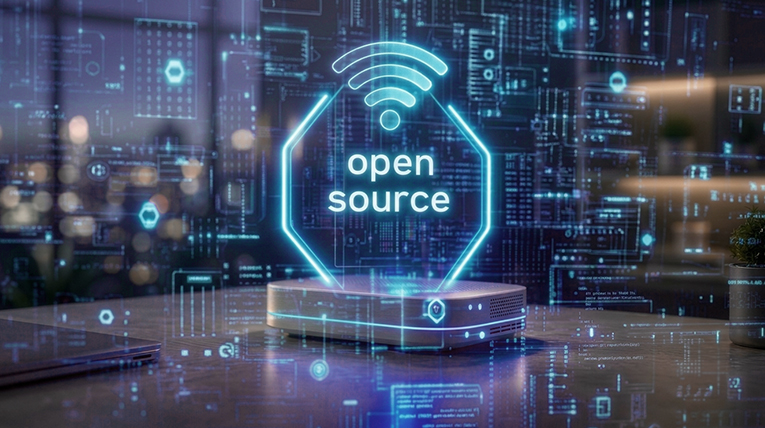
Open source has already changed how broadband CPE software is built. The next challenge is making these platforms smarter, more scalable, secure and ready for what comes next.
The broadband industry has moved beyond asking whether open-source software belongs in CPEs. Linux-based architectures, open frameworks, community-driven components and platforms such as OpenWrt and prplOS are already part of the broader CPE development ecosystem. OpenWrt is an extensible Linux operating system for embedded devices, while prplOS provides a modular open-source platform for embedded networking devices.
The more important question now is:
How do OEMs turn these open foundations into differentiated, secure and continuously evolving products?
Because integrating an open-source platform is only the starting point. The real opportunity lies in how that platform is optimized for silicon, extended with product-specific capabilities, connected to cloud ecosystems, secured throughout its lifecycle and evolved to support the next generation of broadband services.
Table of Contents
From Open-Source Adoption to Open-Source Engineering
The conversation around open source is becoming more sophisticated.
OEMs are increasingly looking at open-source platforms not simply as alternatives to proprietary software, but as foundations for scalable product architectures.
That changes the engineering priorities.
The objective is no longer just to port an operating system onto hardware. It is to create a software platform that can support multiple hardware configurations, integrate evolving connectivity technologies, enable product-specific applications, connect with cloud platforms and remain maintainable throughout the product lifecycle.
This requires:
- Modular and reusable software architecture
- Hardware and silicon-specific optimization
- Robust protocol and connectivity integration
- Robust APIs and application frameworks
- Secure software update mechanisms
- Continuous vulnerability and lifecycle management
- Reusability across product generations
The value of open source increasingly comes from how well it is engineered around the product.
The CPE Is Becoming a Software Platform
Broadband CPEs are evolving rapidly.
A modern gateway can combine high-performance Wi-Fi, routing, security, IoT connectivity, traffic management, diagnostics, cloud management and application services.
With Wi-Fi 7, multi-gigabit broadband, edge computing and AI-driven capabilities becoming increasingly relevant, the software footprint will continue to expand.
This creates a fundamental shift:
The CPE is no longer just a connectivity device. It is becoming a software platform at the network edge.
And software platforms need to be designed for continuous evolution.
They need modularity, reusable components, well-defined interfaces, robust update mechanisms and the ability to introduce new capabilities without destabilizing the entire product.
The Real Complexity Lies Across the Stack
One misconception about open-source CPE development is that integrating the operating system is the primary challenge.
In reality, the complexity lies in making the entire technology stack work together.
A commercial CPE typically brings together:
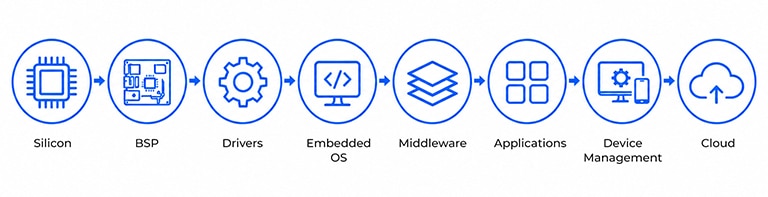
Silicon capabilities need to be exposed correctly through BSP and drivers. Hardware acceleration needs to be leveraged efficiently. Connectivity protocols, wireless capabilities and embedded software components need to work together reliably. Applications need appropriate interfaces, while device management must connect seamlessly with cloud platforms.
This makes hardware-software co-engineering critical.
The strongest open-source CPE platforms will not simply be the ones using open components. They will be the ones where those components are deeply integrated, optimized and validated as a complete system.
Differentiation Moves Above the Foundation
As foundational software becomes increasingly available through open ecosystems, OEM differentiation can move higher up the stack.
Instead of repeatedly rebuilding the underlying platform, engineering teams can focus on capabilities that create real product value:
- Intelligent connectivity and traffic management
- Security services
- Application frameworks
- Device and service management
- Cloud integration
- Analytics and diagnostics
- Operator-specific capabilities
- AI-enabled edge functionality
Open source provides the foundation. Product engineering creates the differentiation.
This can allow OEMs to accelerate development while investing more engineering effort into the features and services that distinguish their products in the market.
Security and Lifecycle Management Become Critical
The software lifecycle of a CPE does not end when the device ships.
A product may remain deployed for years. During that time, new vulnerabilities can emerge, software dependencies can change, protocols can evolve and operators can introduce new requirements.
This makes lifecycle engineering a fundamental part of modern CPE development.
Effective platform management requires:
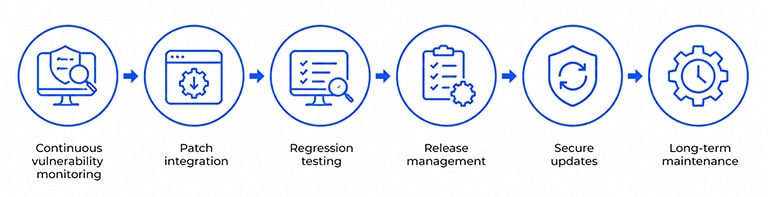
Open source can provide a strong ecosystem and access to widely adopted components, but it does not eliminate the responsibility of the product owner.
The future belongs to organizations that manage open-source software as a living product platform – not a one-time integration project.
What Comes Next: Intelligent and Composable CPEs
The next evolution of CPEs could go beyond connectivity and management.
As AI and edge computing move closer to the customer, CPEs can evolve into platforms for localized intelligence – supporting traffic analysis, anomaly detection, network optimization, application awareness and intelligent service management.
This points toward composable CPEs: platforms where capabilities can be added, updated and evolved through software over time.
Such a model requires software architectures designed for change from the beginning.
Engineering the Open-Source Advantage
For OEMs, the opportunity is no longer simply to adopt open source.
It is to engineer an open-source foundation into a commercially differentiated product.
That requires expertise across the technology stack – from silicon and hardware enablement to BSP, drivers, embedded Linux, connectivity software, application enablement, cloud integration and validation.
At VVDN, we help OEMs integrate and engineer open-source software platforms into next-generation broadband CPE and Wi-Fi solutions.
Our capabilities span hardware and silicon enablement, BSP and driver development, embedded Linux, connectivity software, platform integration, device management, cloud connectivity and system validation.
By combining open-source foundations with deep hardware-software engineering, OEMs can build platforms tailored to their product roadmaps while maintaining the flexibility to evolve with changing technologies and market requirements.
Summary: Open Source Is the Foundation. Engineering Is the Differentiator.
Open source has already become an important part of the broadband CPE ecosystem. The next phase is about making these platforms more modular, secure, intelligent and easier to evolve.
For OEMs, the opportunity is to move beyond integration and build software platforms that can support new products, services and technologies over time.
At VVDN, we help OEMs engineer open-source-based CPE and Wi-Fi platforms by combining expertise across embedded Linux, BSP and drivers, connectivity software, device management, cloud connectivity, silicon and hardware engineering. This enables customers to build scalable, differentiated platforms tailored to their product and market requirements.